You can start an RFQ with only old part photos
Repair buyers often do not have a complete drawing. They may only have old part photos, machine photos, or a removed ball screw. Photos help the supplier understand the structure, but photos cannot replace dimensions. The RFQ still needs diameter, lead, overall length, and thread length, plus nut information.
One figure gets skipped most often: the lead. Its value is printed in the model number (the last two digits of a 1605 are 5 mm), but if the marking has worn off, mark the shaft, turn the nut ten revolutions, measure the travel and divide by ten to get the lead.
Take an overall photo and both end details first
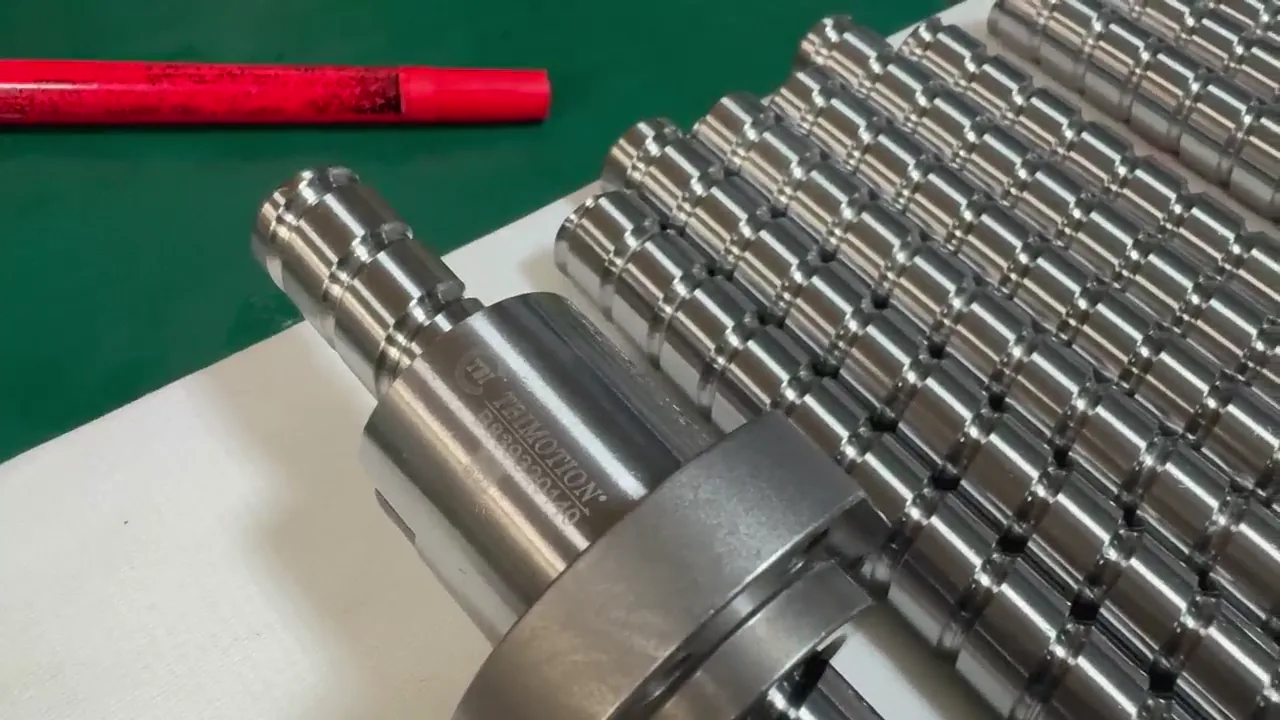
The first photo should show the full screw, including nut position, both ends, and any visible bending or damage. Then take both end details: bearing journals, shoulders, lock threads, keyways, retaining grooves, and the coupling end.
After shooting, record each step's diameter and length in order from the end face to the threaded section, so the photos and the dimension list line up and no step exists in one but not the other.
Put a readable measuring reference in the photo
Place a ruler or caliper in the frame for diameter, lead, end shoulders, hole distance, and nut shape. Blurry photos, angled photos, or photos without scale are only useful for first review and should not be used as machining evidence. For the detailed shaft-end measurement steps, see how to measure ball screw end machining dimensions.
Add installation and application context
If the machine is still on site, add the support model or installation dimensions, axis position, machine model, travel, load, and quantity. Also photograph nut shape, flange direction, and mounting hole positions because these decide whether the new part can fit the old mount.
The handling route follows how complete the information is:
| What you have | The usual route |
|---|---|
| Photos plus all key dimensions, support unit and space unchanged | Copy the old part; a firm price can be quoted |
| Photos plus partial dimensions, end or hole pattern missing | Conditional quotation, confirmed once the missing figures arrive |
| Photos and dimensions, but support unit, coupling or space changed | Draw the new arrangement first; the old part cannot be copied |
Old-photo RFQ checklist
- Overall photo, both end details, and front and side views of the nut.
- Diameter, lead, overall length, and thread length, plus measurable end lengths.
- Support model or installation dimensions, coupling end size, and machine use.
- Nut shape, flange direction, and mounting hole positions, preferably photos with a ruler or caliper.
FAQ
If the old part photos are clear, are measurements still needed? Yes. Clear photos help identify the structure, but diameter, lead, end lengths, and hole distance must be measured; otherwise the new part may look similar but fail at installation dimensions.
What if I have no professional measuring tools? A tape covers overall length and thread length, and calipers are more accurate for diameters and steps. For the lead, ten revolutions and a tape are enough.
What if the old part is dismantled or a nut is missing? Record the structure from what remains and state what is missing. The gaps are noted as conditions in the quotation until they are filled or the part is drawn from the new support unit.
Next step
Turn this guide into an RFQ
When the specification direction is clear, send the details below together with quantity, lead time, and packing requirements.
Include these details
- Old-part overall length, thread length, diameter, lead, and nut style.
- Full old-part photos, both end details, nut flange, and mounting-hole photos.
- Machine use, whether it is a like-for-like replacement, quantity, and lead time.
Category
Related Technical Guides
Continue with similar buyer questions
Replacement: Old-Part Photos and Dimensions Cut Mistakes
Shows why old-part photos need dimensions and application context, not only a model number.
Send old-part dimensions
How to Measure a Replacement Ball Screw: 6 Dimensions
Record diameter, lead, overall length, travel, and end steps before sending old-part photos or samples.
Send replacement dimensions
What to Confirm Before Replacing a Ball Screw in CNC Repair
CNC repair replacement should not be ordered by model number alone because axis, travel, end machining, and old part photos affect installation fit.
Send CNC repair replacement details