Ball screw life is not a vague "how many years it will last". Suppliers quote by calculating the rated life L10 from the dynamic load rating C and your actual axial load. If the RFQ does not state load, speed, and life targets, the supplier can only estimate, which ends in either an under-sized screw that wears early or an over-sized screw that costs too much. This guide explains L10, C, and C0 and the four parameters your RFQ should carry.
What rated life L10 means: fatigue life at 90% reliability
L10 is the accumulated revolutions at which 90% of an identical group are expected to remain free of rolling-contact fatigue flaking under the stated conditions. The definitions of rated life and load ratings follow ISO 14728-1 and ISO 14728-2 together with the manufacturer's life-calculation method. It is not fixed at one million revolutions and does not guarantee an individual screw life. For a dynamic rating C defined on a one-million-revolution basis, the basic equation gives one million revolutions only when the equivalent axial load Fm equals C:
- Life in revolutions: L10 = (C / Fm)^3 x 10^6 revolutions.
- C is the dynamic load rating (N) from the catalog; Fm is the equivalent axial load (N).
- Life in hours: Lh = L10 / (n_m x 60), where n_m is the average speed in rpm.
Example: with C/Fm = 7.2, L10 = (7.2)^3 x 10^6 ≈ 373 x 10^6 revolutions; at an average 500 rpm that is about 12,400 hours. Compare any two duty cases by applying the same formula.
The cubic load law: a small load increase cuts life sharply
Life drops with the third power of the load, which is the most counter-intuitive part of ball screw sizing:
| Change in axial load Fm | Relative life | Intuition |
|---|---|---|
| Base load | 1x | Design baseline |
| Load x1.26 | About 0.5x | Life halves with +26% load |
| Load x2 | About 0.125x | Doubled load leaves about 1/8 life |
So understating the load in an RFQ is risky: reporting 20% less load can overstate life by about 95%, and the real part fails early. Include moving mass, cutting or clamping force, acceleration, and a reasonable impact allowance, and round the estimate upward.
Dynamic load rating C versus static load rating C0
Both C and C0 are printed in catalogs, but they verify different situations:
| Item | Dynamic load rating C | Static load rating C0 |
|---|---|---|
| Load condition | Fatigue check over motion cycles | Static, shock, or slow heavy-load checks |
| Failure basis | Rating basis and reliability used to define C | Permanent contact deformation limit defined by the standard |
| Check | Equivalent load Fm in the life formula | Fmax ≤ C0 / fs |
| Safety factor fs | Basic formula does not include all application factors | Select for manufacturer requirements, shock, and risk |
Applications that "move little but push hard" - low-speed pressing, lift holding, clamping and locking - are governed mainly by C0; high-speed reciprocating feed is governed by C. Describe the duty in the RFQ so the supplier knows whether the axis cycles continuously or holds intermittently.
Put load, speed, and life into one numeric package in the RFQ
The supplier needs four numbers; with them the sizing result is reproducible:
- Maximum axial load Fmax (N): moving mass, cutting/clamping force, acceleration, and impact.
- Equivalent axial load Fm (N): the basic model weights cubed absolute axial loads by revolutions, Fm = [Σ(|Fi|^3 × Ni) / ΣNi]^(1/3), not an arithmetic mean. Confirm variable load, reversal, and preload treatment using the manufacturer method.
- Average speed n_m (rpm): total absolute revolutions divided by cycle minutes. Running at a constant 2000 rpm for 80% of the cycle and stopping for the rest gives 1600 rpm when downtime is included; peak speed alone is insufficient.
- Target life Lh (hours): 30,000 hours equals about 4 years of 20-hour daily operation.
Also state the mounting direction (horizontal or vertical) and duty cycle. Vertical axes are more sensitive to load and braking, see vertical Z axis load and brake selection.
Longer life is not always better: do not pay for life you will not use
With unchanged load and speed in the basic model, increasing life from 30,000 to 40,000 hours requires C to rise by (40000/30000)^(1/3), about 10.1%. This does not imply a particular shaft diameter or higher preload. Check actual catalog ratings, stiffness, critical speed, mounting space, and preload before selecting a model.
FAQ
Is workpiece weight enough as the load? No. The equivalent axial load should include table, fixture, workpiece, and all moving mass, plus acceleration and impact; on a vertical axis add the spindle assembly weight.
Is longer life always better? Set the target and margin from shifts, maintenance plans, and failure consequences. A universal life multiplier cannot replace duty assessment.
Should a low-speed pressing machine check C or C0? Check peak load against C0 and fatigue against actual cycles. Select the static safety factor using the manufacturer method and application risk; a fixed speed threshold does not remove either check.
Do preload and lubrication affect life? Yes. Excessive preload raises internal contact stress and shortens life; poor lubrication or contamination accelerates wear. The life formula assumes normal lubrication and sealing, so state those requirements in the RFQ.
Next step
Turn this guide into an RFQ
When the specification direction is clear, send the details below together with quantity, lead time, and packing requirements.
Include these details
- Model, diameter, lead, accuracy grade, or target application.
- Load, speed, travel, mounting method, and matching rail or support-unit needs.
- Quantity, lead time, packing, and whether inspection records or shipment photos are needed.
Category
Related Technical Guides
Continue with similar buyer questions

Ball Screw Accuracy Class: C3, C5, and C7 Explained
Choose the ball screw accuracy class by positioning requirement and state the acceptance criteria in the RFQ.
Send accuracy requirement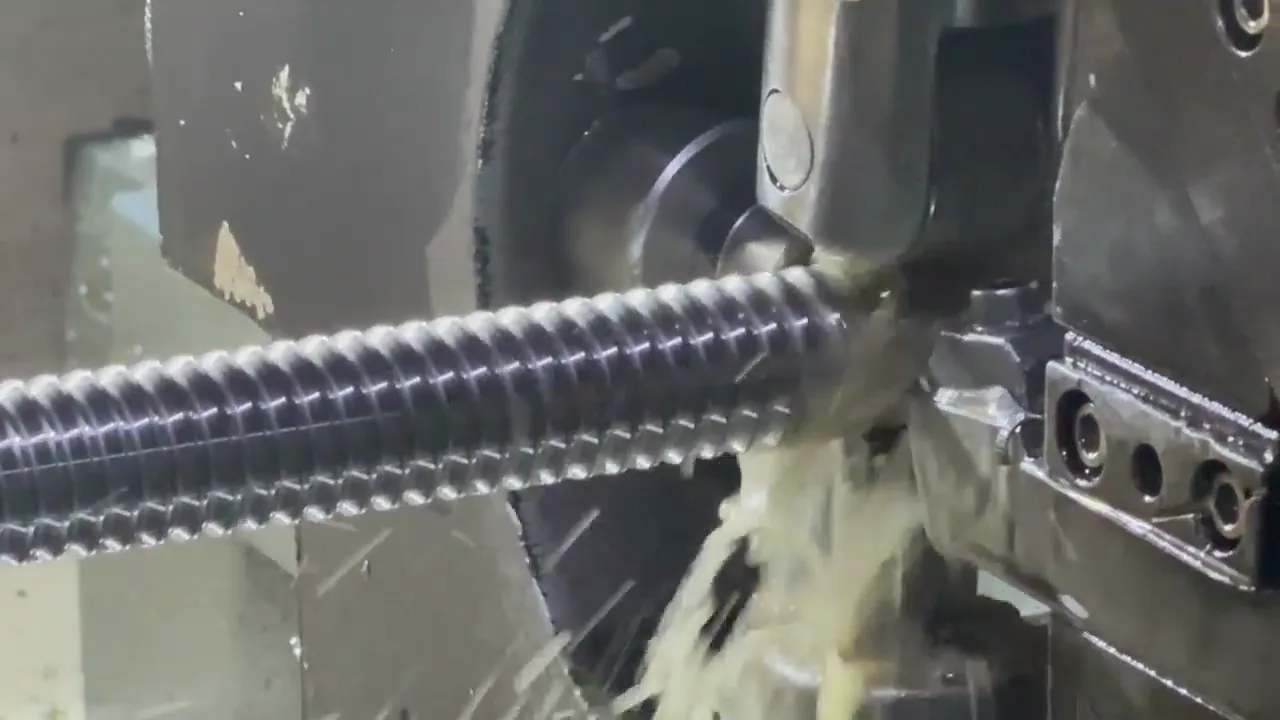
How Ball Screw Lead Changes Speed and Thrust
Compare how larger lead changes speed, thrust, and control margin, then list the axis parameters required before an RFQ.
Send lead and speed requirements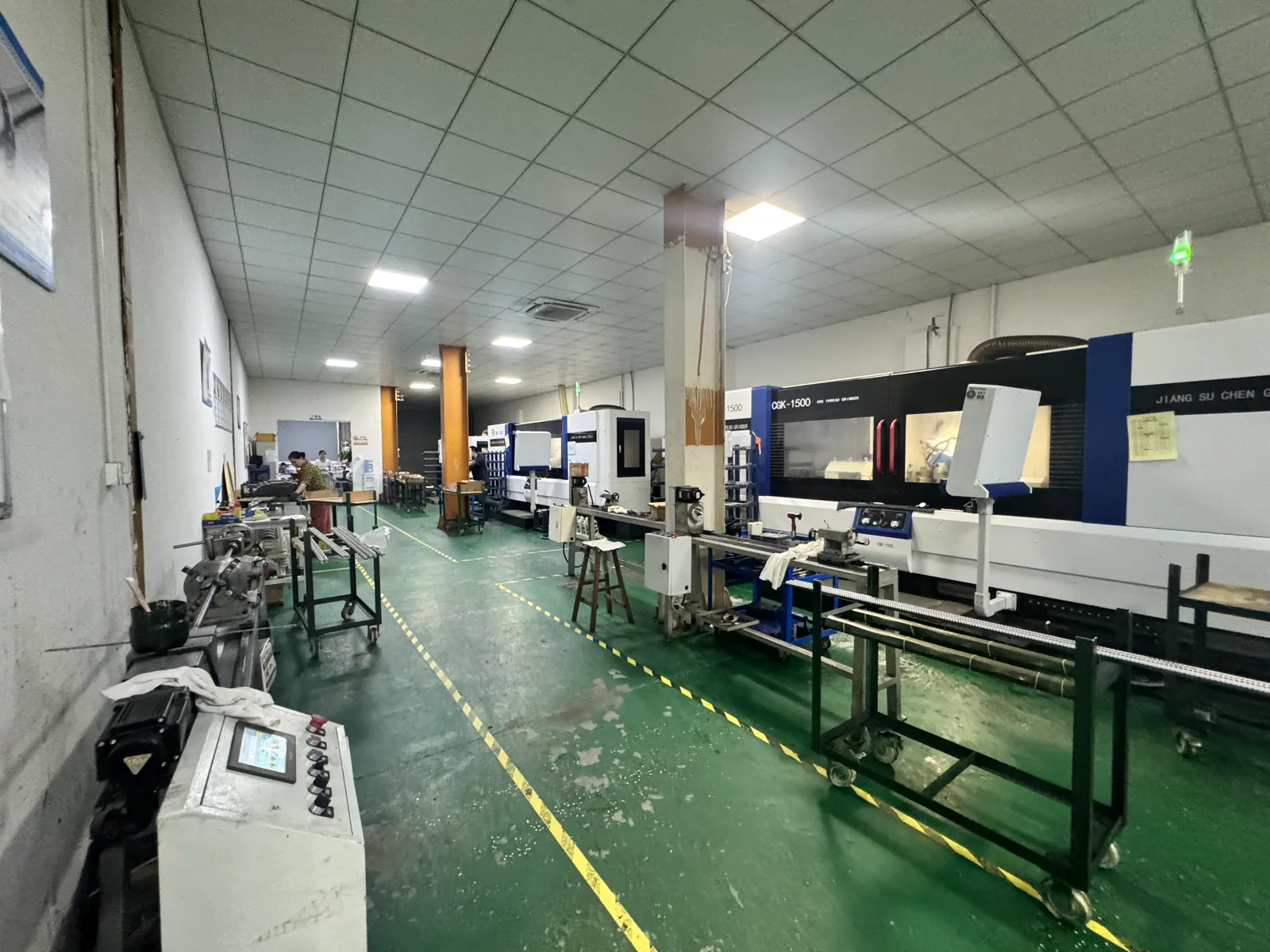
Automation Ball Screw RFQ: How to State Application Parameters
An automation-equipment RFQ needs application parameters alongside the model, accuracy, lead-time, and packing requirements.
Send automation application parameters