Confirm diameter first, then lead
2005 and 2010 are both 20 mm diameter ball screws. The main difference is lead. 2005 favors higher thrust and finer feed, while 2010 favors faster linear motion and better long-travel efficiency.
The numbers behind 5 mm and 10 mm
| Parameter | 2005 (5 mm lead) | 2010 (10 mm lead) |
|---|---|---|
| Linear speed at 1000 rpm | 5 m/min | 10 m/min |
| Thrust from 1 N·m (efficiency 0.9) | About 1.1 kN | About 0.57 kN |
| Travel per pulse at 1600 pulses/rev | About 3.1μm | About 6.25μm |
| Travel per revolution | 5 mm | 10 mm |
The figures are an order-of-magnitude comparison. The 20 mm diameter sets how much load and how long a support span the screw can carry; the lead sets speed and thrust. Judge them separately.
Load and speed must be checked together
Buyers often judge diameter and lead separately, but selection should include motor torque, load, target speed, support span, and mounting direction. Otherwise the screw may be fast but weak, or strong but too slow.
The derivation is in how ball screw lead changes speed and thrust; a same-family comparison is in 1605 versus 1610.
Do not change lead casually for replacement
For machine repair, changing lead affects control parameters, speed ratio, and positioning result. Unless the system can be reset, 2005 and 2010 should not be swapped casually.
- Confirm machine model and old screw marking.
- Record diameter, lead, overall length, and nut style.
- Describe load, speed, and horizontal or vertical mounting.
- Confirm whether old-part end machining must be copied.
RFQ checklist
- State whether the model is 2005 or 2010, or ask for a recommendation.
- Provide travel, target speed, load, and mounting direction.
- Give motor torque, support model, and support span.
- For replacement, note whether the old end machining must be copied.
FAQ
Can 2005 be replaced directly with 2010? Usually no. Changing lead from 5 mm to 10 mm changes speed ratio, thrust, motor load, and control parameters, so repair replacement should first confirm whether the system can be reset.
Why does the same 20 mm diameter give half the thrust? Because thrust = 2π × efficiency × torque ÷ lead. Double the lead and the same torque buys half the thrust, while travel per revolution doubles.
Which one suits long travel? Check how much rpm is still available. A long span lowers the usable ceiling, but inside that ceiling a 2010 still travels farther per revolution, so its speed advantage does not disappear because of critical speed itself. What to check first is thrust margin, drive torque, nut speed limit and vibration; while those still have margin, the practical answer is a stiffer support or fixed-fixed ends rather than dropping back to a 2005, because a smaller lead does not raise the ceiling and needs a higher rpm for the same linear speed.
For a quote-ready request, include diameter, lead, overall length, nut style, quantity, and mounting direction. See Standard Parts and send the details through the RFQ form.
Next step
Turn this guide into an RFQ
When the specification direction is clear, send the details below together with quantity, lead time, and packing requirements.
Include these details
- Model, diameter, lead, accuracy grade, or target application.
- Load, speed, travel, mounting method, and matching rail or support-unit needs.
- Quantity, lead time, packing, and whether inspection records or shipment photos are needed.
Category
Related Technical Guides
Continue with similar buyer questions
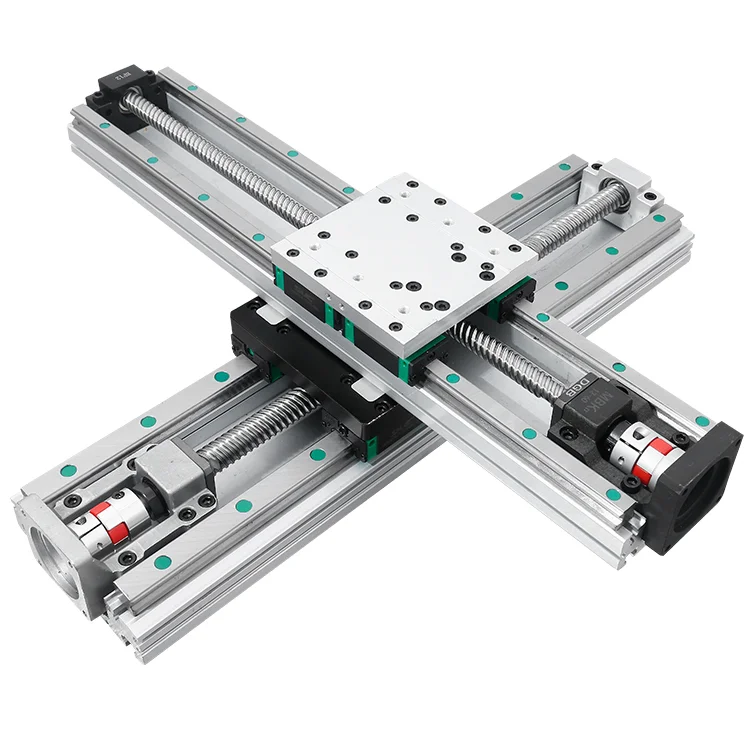
Linear Module Basics: Stroke, Load, Speed, and Accuracy Explained
State stroke, load, speed, cycle time, and accuracy together when selecting a linear module and requesting a quote.
Send linear module parameters
How to Choose Ball Screw Lead for a CNC Router
Explain common CNC router lead selection by speed, thrust, control resolution, and axis use.
Send CNC lead requirements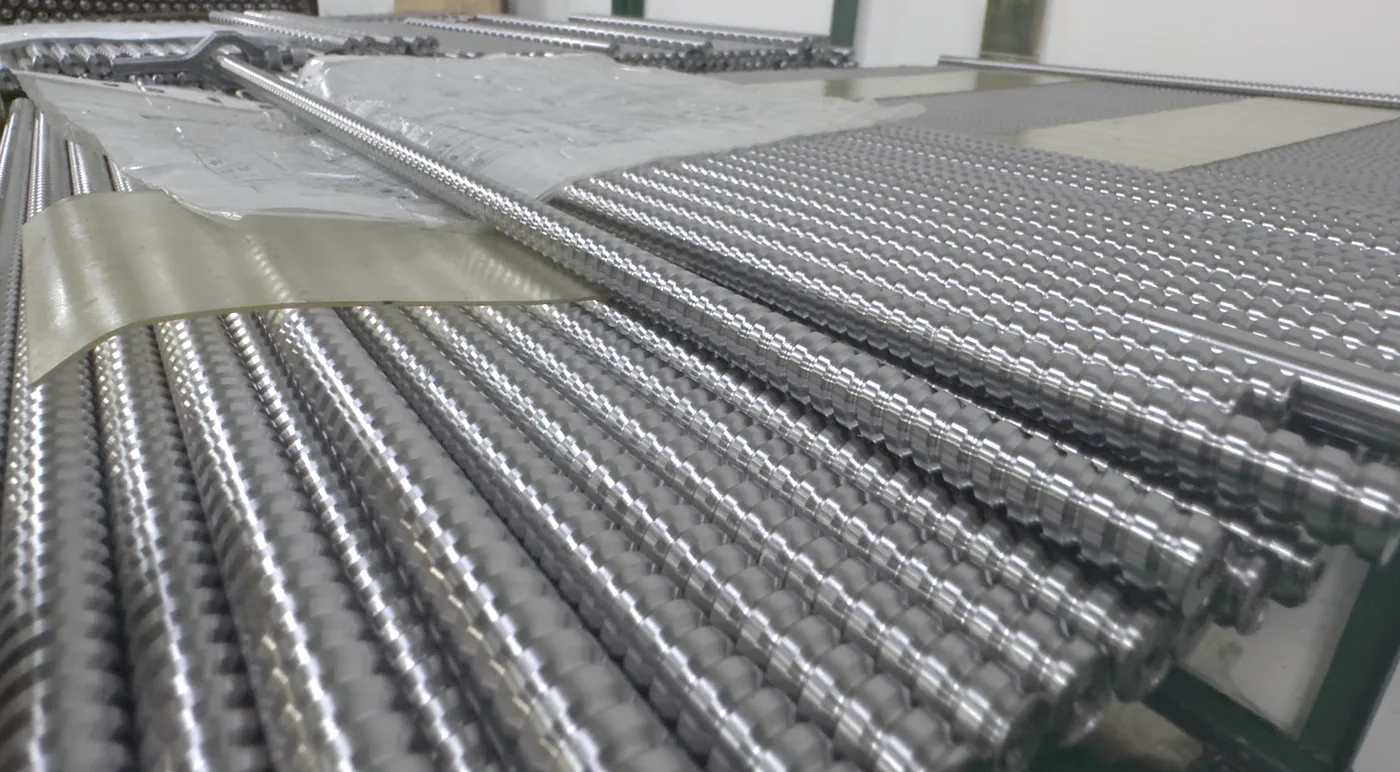
3205 vs 3210 Ball Screw: Lead, Speed, and Load Guide
Compare 3205 and 3210 by long travel, speed, load, support span, and packing conditions.
Send 3205/3210 requirements